
Evidence-Based Tests That Reveal How You’re Aging
Longevity isn’t about predicting how long you’ll live. It’s about understanding how well your body functions today, and whether it’s adapting, maintaining, or declining over time.
Across aging, cardiovascular, and functional health research, a consistent message emerges: a small number of physical and physiological capacities strongly reflect healthspan, independence, and resilience. While no at-home test replaces professional assessment, the right self-screenings can reveal meaningful signals and help you decide what to address next.
The following evidence-based self-tests reflect the same pillars used in comprehensive Vitality screenings, strength, movement capacity, aerobic fitness, and nervous system regulation, using practical, accessible proxies you can perform at home.
These tests establish a baseline, not a diagnosis.
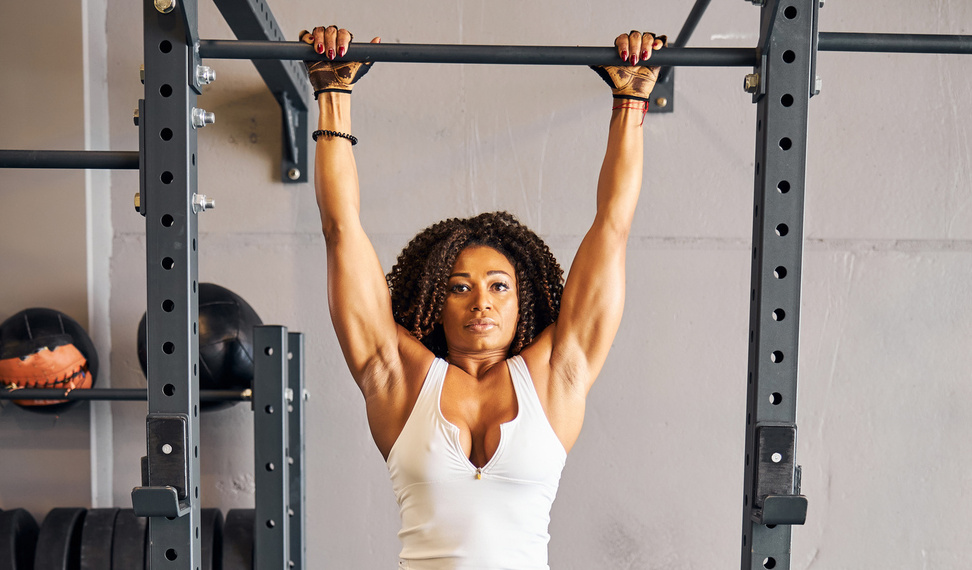
1. Dead Hang Test
What it reflects: Upper-body strength, grip endurance, shoulder integrity, and nervous system tolerance
How to perform:
Hang from a pull-up bar with your feet off the ground. Time how long you can maintain a controlled hang.
General reference ranges:
-
< 15 seconds: Below functional baseline
-
15–30 seconds: Adequate baseline
-
30–60 seconds: Strong functional capacity
-
60+ seconds: Excellent upper-body resilience
Why it matters:
Grip strength has been repeatedly associated with overall strength, neurologic health, and mortality risk. The dead hang serves as a functional proxy by integrating grip, shoulder stability, and trunk engagement—qualities directly related to independence and injury resilience.
2. Sit-to-Stand Test (30 Seconds)
What it reflects: Lower-body strength, balance, coordination, and independence
How to perform:
From a standard chair (approximately 17–18 inches), stand up and sit down as many times as possible in 30 seconds without using your hands.
General reference ranges:
-
< 8 reps: Below expected capacity
-
8–12 reps: Functional baseline
-
13–17 reps: Above average
-
18+ reps: Excellent lower-body function
Why it matters:
This test is directly linked to independence, fall risk, and mortality in aging adults. It reflects the capacity required for daily life, tanding, climbing stairs, and maintaining balance under fatigue.
3. 6-Minute Walk Test
What it reflects: Aerobic fitness and cardiovascular efficiency
How to perform:
Walk as far as possible in six minutes on a flat surface. Measure the total distance covered.
General reference ranges (adults ~40–70):
-
< 450 meters: Below expected
-
450–550 meters: Functional baseline
-
550–650 meters: Strong aerobic capacity
-
650+ meters: Excellent endurance
Why it matters:
Aerobic capacity is one of the strongest predictors of long-term health and survival. While VO₂ max requires laboratory testing, the 6-minute walk test is a validated clinical proxy widely used in cardiology, pulmonary medicine, and aging research.
4. B.O.L.T. Score (Breath Control Test)
What it reflects: Nervous system balance, stress load, and respiratory efficiency
How to perform:
After a normal exhale, hold your breath and time how long it takes until the first clear urge to breathe.
General reference ranges:
-
< 10 seconds: High stress load
-
10–20 seconds: Moderate stress load
-
20–30 seconds: Balanced nervous system
-
30+ seconds: Strong autonomic resilience
Why it matters:
Breath control reflects carbon dioxide tolerance and autonomic nervous system regulation. Lower scores are commonly associated with chronic stress, poor sleep, and inefficient breathing patterns, all of which are highly trainable.
What These Tests Tell You, and What They Don’t
These self-screenings provide directional insight, not medical diagnoses. They help identify patterns, limitations, and opportunities, but they do not replace comprehensive testing.
Professional Vitality screenings expand on these same domains using higher-resolution tools, movement analysis, metabolic testing, body composition, aerobic capacity, recovery metrics, and blood markers, to guide individualized strategies for aging well.
References
-
-
Grip Strength and Longevity
Bohannon RW. Grip strength: an indispensable biomarker for older adults.
Clinical Interventions in Aging, 2019.
https://pmc.ncbi.nlm.nih.gov/articles/PMC6778477/
-
Sit-to-Stand Ability and Mortality Risk
Brito LB et al. Ability to sit and rise from the floor as a predictor of all-cause mortality.
European Journal of Preventive Cardiology, 2014.
https://pubmed.ncbi.nlm.nih.gov/23242910/
-
Six-Minute Walk Test and Cardiovascular Health
Bohannon RW, Crouch R. Six-minute walk test: a meta-analysis of data from healthy adults.
Physiotherapy, 2017.
https://pmc.ncbi.nlm.nih.gov/articles/PMC5449834/
-
Breath Control, CO₂ Tolerance, and Nervous System Regulation
Courtney R, Greenwood KM. Preliminary investigation of a measure of dysfunctional breathing.
Frontiers in Physiology, 2017.
https://pmc.ncbi.nlm.nih.gov/articles/PMC5709795/
-
ABOUT US
Founded in 2001, The team at Dynamic Health And Fitness believes that individuals must take a proactive, integrated approach on their personal vitality. Our mission is to provide the strategies and techniques necessary for individuals to enhance their lives and also impact those around them. We provide cutting edge programming that fuels our performance center and suite of mobile apps. Our goal is to become a leading resource for individuals, groups, and companies to create a needed shift in health.
The DHF Performance Center is located in the Syracuse, NY area and boasts world class training facilities with cutting edge technology to assist our clients in achieving their health, wellness, and performance goals.