






The supplement industry evolves quickly. Every year introduces new compounds promising better energy, improved metabolism, or faster recovery. Yet despite the constant innovation, a small group of supplements has consistently remained supported by decades of scientific research and clinical experience.
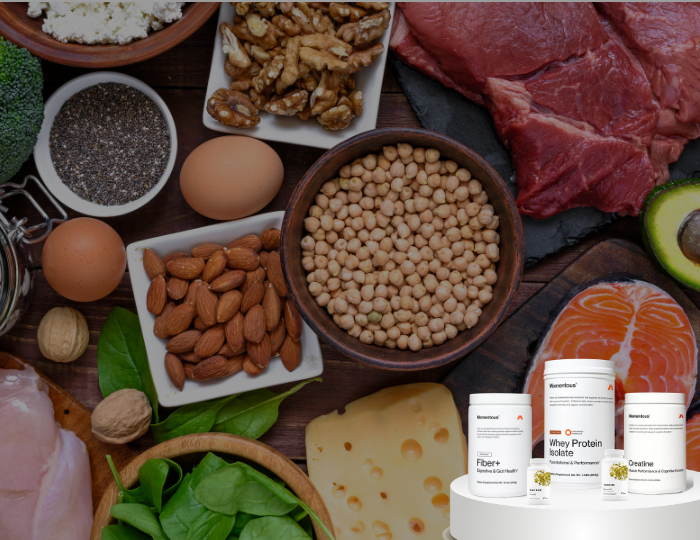
At Dynamic Performance & Recovery, our Vitality Foundational Stack focuses on nutrients that repeatedly demonstrate measurable benefits for muscle health, metabolic function, recovery, and long-term vitality. These include protein, creatine, fiber, and vitamin D paired with vitamin K.
These supplements are not intended to replace whole foods. Instead, they help support daily nutritional intake when diet alone may fall short. For many adults balancing work, family, and an active lifestyle, achieving optimal intake of key nutrients through food alone can be challenging.
Rather than chasing trends, our approach prioritizes nutritional strategies that have stood the test of time and remain strongly supported by scientific evidence.
Food First—But Nutritional Gaps Are Common
Whole foods remain the foundation of health and performance. However, large population studies consistently show that modern diets often fall short in several key nutrients essential for metabolic health and longevity.
Common dietary patterns frequently lead to gaps in protein intake, fiber intake, vitamin D levels, and nutrients that support muscle metabolism. National dietary surveys show that most Americans consume significantly less fiber than recommended, and vitamin D insufficiency remains common across multiple age groups due to limited sun exposure and lifestyle factors.
As individuals age, maintaining muscle mass, metabolic efficiency, and recovery capacity becomes increasingly important. Strategic supplementation can help close the gap between what people are consuming and what their physiology actually requires.
Protein: Supporting Muscle, Recovery, and Metabolic Health
Protein plays a central role in maintaining muscle tissue, supporting recovery from exercise, and regulating metabolic health. While the Recommended Dietary Allowance (RDA) for protein is set at 0.8 grams per kilogram of bodyweight, many researchers believe this level represents the minimum required to prevent deficiency rather than the amount needed for optimal health.
Emerging evidence suggests that higher protein intake supports improved muscle maintenance, particularly in active individuals and older adults. Research increasingly supports intake levels closer to approximately 1.6 grams per kilogram of bodyweight per day for optimizing muscle protein synthesis.
Whey protein supplementation is frequently used to help individuals reach these intake targets because it provides a highly bioavailable protein source rich in leucine, an amino acid known to stimulate muscle protein synthesis.
Adequate protein intake supports preservation of lean muscle mass, improved recovery from training, and metabolic health and satiety. A large meta-analysis published in the British Journal of Sports Medicine found that protein supplementation significantly enhances muscle strength and lean body mass when combined with resistance training.
Creatine: One of the Most Studied Supplements in Nutrition Science
Creatine is often associated with athletic performance, but decades of research have revealed broader benefits beyond sports performance. Creatine functions as a key component of the body’s cellular energy system, helping regenerate ATP, the primary energy currency used by muscle and brain cells.
Because of its role in energy production, creatine supplementation can improve performance during high-intensity activities and support overall training capacity.
Research has demonstrated that creatine supplementation can support increased muscular strength and power, improved training volume and recovery, preservation of lean muscle mass with aging, and potential benefits for cognitive and neurological health.
A review published in the Journal of the International Society of Sports Nutrition concluded that creatine is one of the most effective and well-researched supplements available for increasing strength and lean body mass. Evidence-based intake typically falls between 5–10 grams per day depending on body size and training demands.
Fiber: Essential for Gut and Metabolic Health
While protein and creatine often receive attention in performance discussions, fiber remains one of the most important, and most overlooked nutrients in the modern diet.
Fiber plays a crucial role in supporting digestive health, regulating blood sugar levels, and maintaining a healthy gut microbiome. Despite its importance, dietary surveys show that most adults consume far less fiber than recommended.
Current recommendations suggest approximately 25 grams per day for women and 38 grams per day for men.
Adequate fiber intake has been associated with improved metabolic health and reduced risk of several chronic diseases. A large meta-analysis published in The Lancet found that higher dietary fiber intake was associated with significant reductions in cardiovascular disease, type 2 diabetes, and overall mortality risk.
When daily food intake does not consistently provide adequate fiber, supplementation can help individuals reach these beneficial intake levels.
Vitamin D and Vitamin K: A Critical Partnership
Vitamin D has long been recognized as an essential nutrient for bone health and immune function. However, its role extends beyond bone metabolism. Research shows that vitamin D influences muscle function, inflammation regulation, and immune system activity.
Despite its importance, vitamin D insufficiency is extremely common, particularly in regions with limited sun exposure during large portions of the year.
Vitamin D works most effectively when paired with vitamin K, which helps regulate how calcium is utilized in the body. While vitamin D supports calcium absorption, vitamin K helps ensure that calcium is directed into bone tissue rather than accumulating in soft tissues such as arteries.
Together, these nutrients support bone mineral density, cardiovascular health, and proper calcium metabolism.
The Supplements That Continue to Stand the Test of Time
Many supplements appear briefly in the spotlight before fading as research fails to support their claims. In contrast, protein, creatine, fiber, and vitamin D have remained relevant because their benefits continue to be reinforced by new scientific evidence.
These nutrients support fundamental biological processes including muscle maintenance, metabolic regulation, recovery, and bone health. For individuals striving to maintain strength, energy, and resilience throughout life, ensuring adequate intake of these nutrients is essential.
The goal of the Vitality Foundational Stack is not to replace a healthy diet but to support it, helping individuals consistently reach the intake levels necessary to perform well, recover effectively, and maintain long-term vitality.
Why We Use Momentous and Thorne Supplements
Not all supplements are created equal. While the ingredients listed on a label may appear similar across brands, the quality, purity, and bioavailability of those ingredients can vary significantly depending on how the supplement is manufactured and tested.
At Dynamic Performance & Recovery, we carefully select supplement partners whose products meet the highest standards for efficacy, safety, and transparency. For our Vitality Foundational Stack, we rely on Momentous and Thorne because both companies prioritize rigorous testing, responsible formulation, and science-driven manufacturing.
One of the most important concerns within the supplement industry is regulation. Unlike pharmaceuticals, dietary supplements are not approved by the FDA prior to being sold. While manufacturers must follow Good Manufacturing Practices (GMP), the responsibility for ensuring product purity and accuracy largely rests with the companies themselves. This is why third-party testing and certification are critical indicators of supplement quality.
Both Momentous and Thorne invest heavily in independent testing to verify that their products contain the ingredients listed on the label and are free from contaminants such as heavy metals or banned substances. Momentous products are widely used in elite sport environments and are NSF Certified for Sport, one of the most rigorous testing programs available for supplements. Thorne similarly maintains strict quality control standards and has long been trusted by clinicians, health professionals, and performance practitioners.
Beyond purity and testing, another key consideration is bioavailability, which refers to how efficiently the body can absorb and utilize a nutrient. A supplement may contain a nutrient on the label, but if the body cannot effectively absorb it, its benefits will be limited. Both Momentous and Thorne prioritize highly bioavailable forms of nutrients and carefully designed formulations to ensure the body can utilize the nutrients effectively.
When selecting supplements for the Vitality program, our goal is simple: choose products backed by science, manufactured with integrity, and formulated for real biological impact. Momentous and Thorne meet those standards and allow us to confidently recommend supplements that support the long-term health and performance of our community.
_______________________________________________________________________________________________
References
Morton RW et al. (2018). A systematic review, meta-analysis and meta-regression of protein supplementation on resistance training–induced gains. British Journal of Sports Medicine.
Kreider RB et al. (2017). International Society of Sports Nutrition position stand: safety and efficacy of creatine supplementation. Journal of the International Society of Sports Nutrition.
Reynolds A et al. (2019). Carbohydrate quality and human health: a series of systematic reviews and meta-analyses. The Lancet.
Holick MF (2007). Vitamin D deficiency. New England Journal of Medicine.
Schwalfenberg GK (2017). Vitamin K2 and vitamin D in bone and cardiovascular health. Open Heart.
ABOUT US
Founded in 2001, The team at Dynamic Health And Fitness believes that individuals must take a proactive, integrated approach on their personal vitality. Our mission is to provide the strategies and techniques necessary for individuals to enhance their lives and also impact those around them. We provide cutting edge programming that fuels our performance center and suite of mobile apps. Our goal is to become a leading resource for individuals, groups, and companies to create a needed shift in health.
The DHF Performance Center is located in the Syracuse, NY area and boasts world class training facilities with cutting edge technology to assist our clients in achieving their health, wellness, and performance goals.